

Best wireless chargers for Apple devices in 2026
Forget everything you think you know about wireless charging being slow or cumbersome. Modern wireless chargers have evolved into sophisticated accessories that combine 15W fast charging capabilities with sleek portability, making them essential companions for tech-savvy travellers with Apple devices. This guide breaks down the technology, features, and top products that transform how you power your iPhone, AirPods, and Apple Watch on the go.
Table of Contents
- Introduction To Wireless Charging And Its Role For Apple Devices
- How Wireless Charging Works With Apple Devices: Magsafe And Qi Standards
- Portability And Design: What Makes A Wireless Charger Travel-Friendly
- Charging Speed, Efficiency, And Multi-Device Support
- Top Wireless Chargers And Products For Tech-Savvy Travellers In 2026
- Safety Features And Certifications: Ensuring Reliable Travel Charging
- Debunking Common Misconceptions About Wireless Charging
- Practical Tips For Choosing And Using Wireless Chargers As A Traveller
- Choose Your Ideal Travel Power Solutions At Charg-R
Key takeaways
| Point | Details |
|---|---|
| Wireless standards | MagSafe and Qi protocols ensure seamless compatibility and efficient power delivery for all modern Apple devices. |
| Portability metrics | Travel-friendly chargers weigh under 200g and measure below 15mm thick, fitting easily into any bag without adding bulk. |
| Fast charging | 15W output halves iPhone charging time compared to older 7.5W standards, dramatically reducing downtime during travel. |
| Multi-device support | Single chargers can power iPhone, AirPods, and Apple Watch simultaneously, eliminating cable clutter for minimalist packers. |
| Safety certifications | FCC compliance and built-in temperature controls protect devices and ensure reliable operation across different travel environments. |
Introduction to wireless charging and its role for Apple devices
Wireless charging has shifted from novelty to necessity for Apple users who value convenience and aesthetics. The technology primarily relies on Qi and MagSafe standards that enable cable-free power delivery through electromagnetic induction. For frequent travellers, this means no more tangled cables in luggage or searching for the right connector in dim hotel rooms.
The appeal extends beyond simple convenience. Portability and stylish design drive adoption among tech-savvy individuals who refuse to compromise functionality for aesthetics. A wireless charger that fits into a jacket pocket whilst delivering fast charging represents the ideal intersection of form and function.
Common travel scenarios highlight why wireless charging matters:
- Airport lounges where cable access is limited but flat surfaces abound
- Coffee shops where you need quick power without occupying table space with cables
- Hotel rooms with awkward outlet placements that make wired charging inconvenient
- Shared workspaces where minimalist setups project professionalism
The right wireless charger addresses these challenges whilst maintaining the premium experience Apple users expect. Understanding how to choose wireless chargers for Apple devices transforms travel power management from frustration to seamless routine.
How wireless charging works with Apple devices: MagSafe and Qi standards
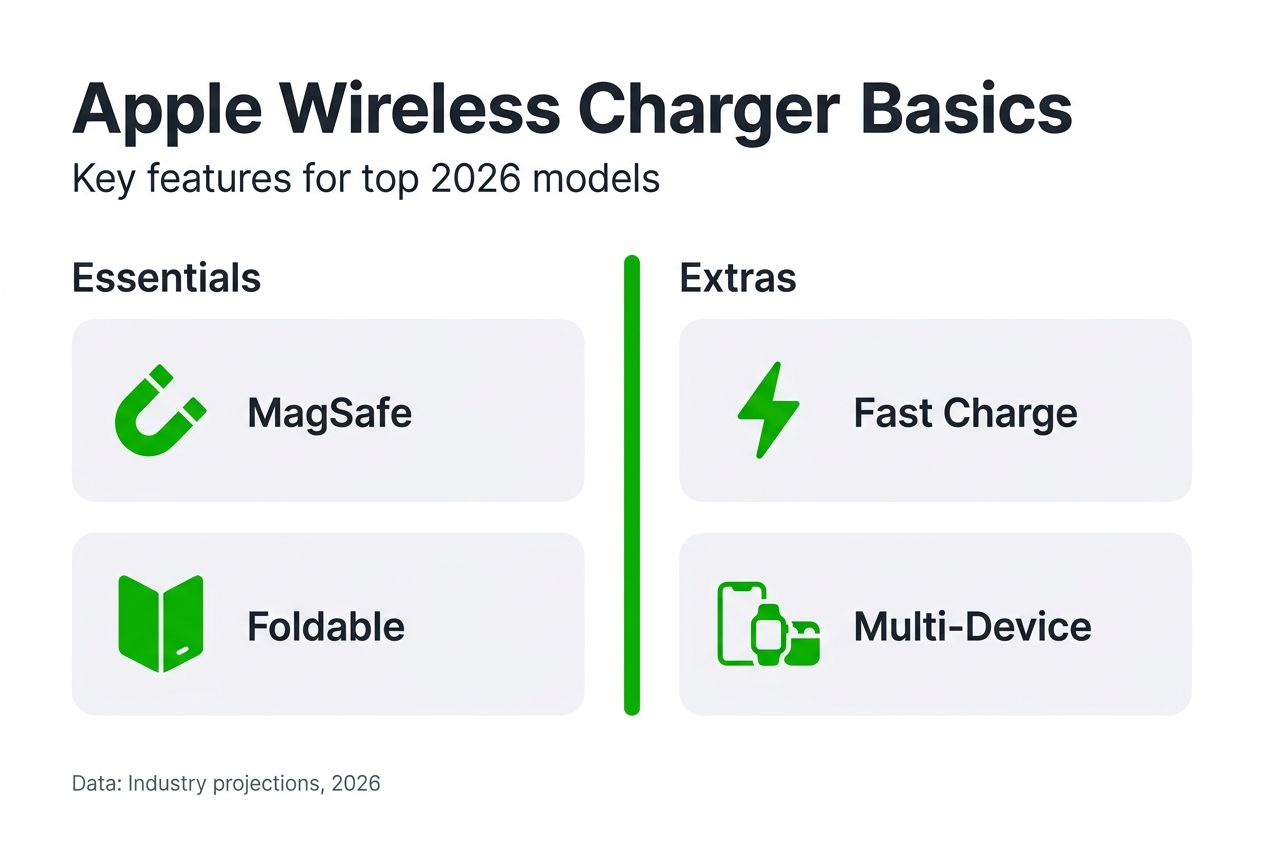
Apple’s wireless charging ecosystem operates on two complementary technologies that work together to deliver reliable power. MagSafe uses magnetic alignment to position your iPhone precisely on the charging pad, optimising energy transfer and preventing the device from sliding during use. This magnetic snap provides tactile confirmation that charging has begun, a subtle detail that enhances user confidence.
The older Qi standard remains relevant for charging AirPods, Apple Watch, and older iPhones that predate MagSafe. Qi protocol supports up to 15W charging for iPhone 12 and newer models, matching the performance of many wired chargers. This power level marks the threshold where wireless charging transitions from acceptable to genuinely practical for daily use.
Key technical advantages for travellers include:
- Magnetic alignment prevents charging interruptions when moving devices on nightstands or desks
- Universal Qi compatibility means one charger works across your entire Apple ecosystem
- 15W fast charging delivers meaningful power during short airport layovers or cafe stops
- No Lightning port wear from repeated cable insertions, extending device longevity
The distinction between MagSafe and standard Qi matters when selecting chargers. MagSafe-certified accessories guarantee optimal performance with iPhone 12 and later, whilst Qi chargers offer broader compatibility at potentially lower power outputs. Understanding MagSafe compatibility helps you match charger capabilities to your specific device lineup.
Portability and design: what makes a wireless charger travel-friendly
True travel readiness comes down to measurable physical characteristics that separate airport-friendly chargers from desk-bound alternatives. Industry benchmarks place ideal weight under 200 grams and thickness below 15mm, dimensions that allow chargers to slip into laptop bags without noticeable bulk. These numbers represent the sweet spot where functionality meets genuine portability.
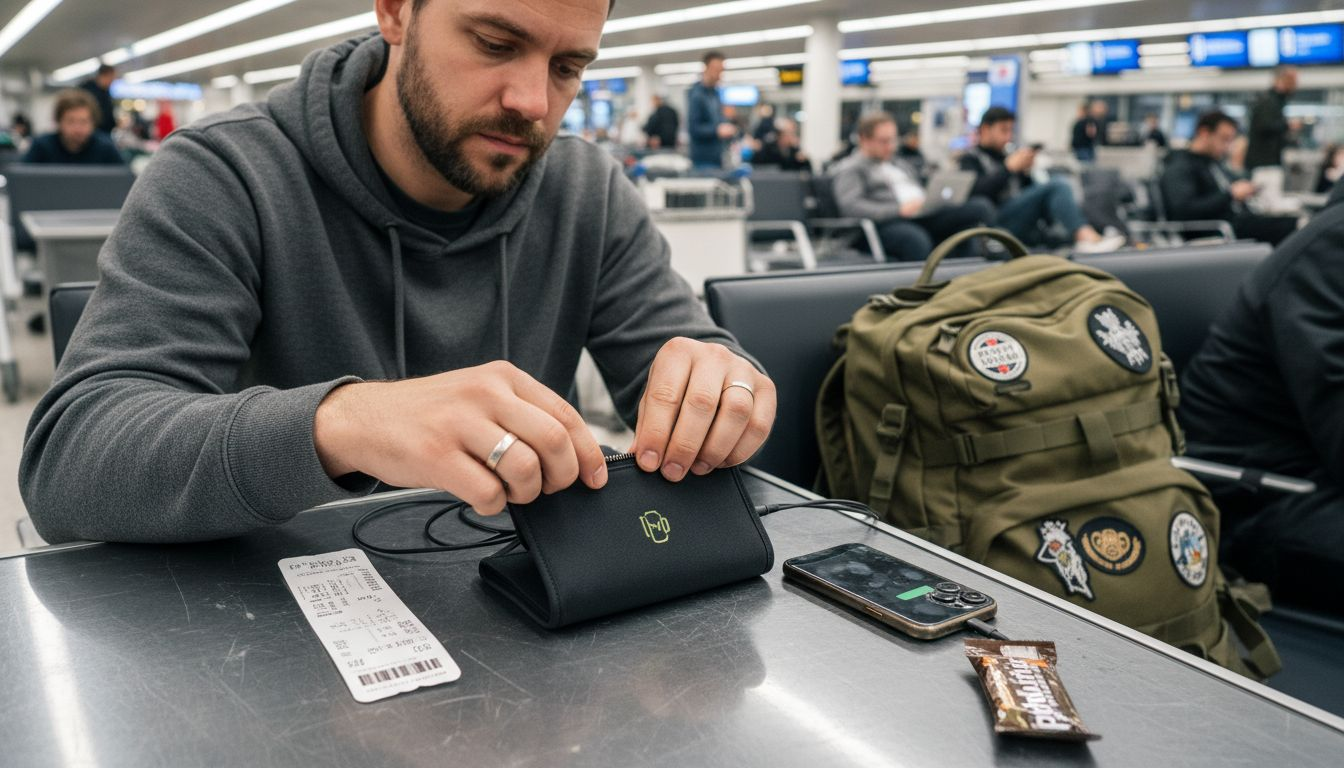
Foldable designs revolutionise packing efficiency by reducing the charger’s footprint when not in use. Foldable and modular constructions transform three-dimensional charging stations into flat profiles that stack neatly between clothes or notebooks. This collapsibility proves invaluable for minimalist travellers operating with carry-on-only strategies.
Design considerations for serious travellers:
- Matte finishes resist fingerprints and maintain professional appearance during business trips
- Integrated cable management prevents loose wires from creating bag chaos
- Modular sections allow customisation based on which devices you’re actually carrying
- Neutral colour schemes match premium luggage and tech accessories
The tradeoff between battery capacity and portability requires honest assessment of your usage patterns. Higher-capacity units inevitably add weight, but modular designs mitigate this by allowing you to leave unnecessary components at home. A 10,000mAh power bank with wireless charging might serve weekend trips perfectly whilst proving cumbersome for daily commutes.
Pro Tip: Prioritise foldable chargers with magnetic alignment features to enjoy hassle-free charging without sacrificing precious luggage space, especially for multi-day trips where weight accumulates quickly.
Charging speed, efficiency, and multi-device support
Charging speed directly impacts your travel productivity by determining how much power you can capture during brief stops. 15W wireless charging halves the time required to reach full battery compared to 7.5W alternatives, transforming a 30-minute coffee break into meaningful charging opportunity rather than wasted time. This efficiency becomes critical during packed travel schedules where every minute counts.
Multi-device charging stations consolidate your entire Apple ecosystem into a single accessory. Simultaneous charging for iPhone, AirPods, and Apple Watch eliminates the cable spaghetti that typically clutters hotel nightstands and airline seats. One compact unit replaces three separate charging solutions, dramatically simplifying your travel kit.
| Feature | 7.5W Charger | 15W Charger |
|---|---|---|
| iPhone 13 Pro to 50% | ~60 minutes | ~30 minutes |
| Multi-device support | Usually single device | Often 2-3 devices |
| MagSafe alignment | Not guaranteed | Standard feature |
| Travel weight | 150-180g | 180-220g |
| Typical price range | £25-40 | £45-75 |
Magnetic alignment serves a secondary function beyond precise positioning. It prevents charging interruptions when you bump the nightstand or check notifications, maintaining continuous power flow that maximises the charging window. This stability proves particularly valuable in moving environments like trains or ride-shares where vibration could otherwise disconnect standard Qi chargers.
Efficiency improvements manifest in real-world scenarios:
- Airport lounge visits yield 40-50% charge in typical 45-minute waits
- Hotel overnight charging completes well before morning, allowing earlier unplugging to preserve battery health
- Cafe work sessions provide meaningful power boosts without requiring extended stays
- Multi-device charging ensures all accessories remain powered without staggered charging routines
Understanding the role of multi-device chargers in modern travel reveals how consolidated charging solutions reduce both physical and mental overhead during trips.
Pro Tip: Select chargers offering simultaneous multi-device support with magnetic alignment to eliminate charging choreography and ensure all devices receive optimal power whilst you focus on your journey.
Top wireless chargers and products for tech-savvy travellers in 2026
The wireless charging market in 2026 offers sophisticated options that balance portability, power, and price for demanding travellers. Belkin BoostCharge Pro delivers reliable magnetic alignment with versatile device compatibility, featuring an integrated stand that props your iPhone at ideal viewing angles during video calls or navigation. Its 15W Qi fast charging ensures efficient power delivery without compromising the sleek aluminium design.
RORRY MagSafe power banks combine portability with foldable designs that collapse to pocket-friendly dimensions when not actively charging. These units typically weigh around 180g and measure under 12mm thick when folded, making them nearly invisible in laptop bags or jacket pockets. The magnetic attachment transforms them into temporary stands, adding utility beyond simple charging.
| Model | Weight | Charging Speed | Multi-Device | Foldable | Price Range |
|---|---|---|---|---|---|
| Belkin BoostCharge Pro | 195g | 15W | iPhone + AirPods | No | £65-80 |
| RORRY MagSafe Bank | 175g | 15W | iPhone only | Yes | £45-60 |
| Anker 3-in-1 Station | 210g | 15W | iPhone + Watch + AirPods | Yes | £70-90 |
| Mophie Snap+ | 165g | 15W | iPhone + AirPods | No | £55-70 |
Price variations reflect feature sets and build quality rather than pure charging capability. Higher-end models justify costs through premium materials, superior magnetic strength, and thoughtful design details like cable routing or adjustable viewing angles. For frequent travellers, these refinements translate to daily quality-of-life improvements that compound over hundreds of uses.
Choosing the right charger depends on your specific travel profile. Light packers prioritise foldable single-device solutions, whilst digital nomads carrying full Apple ecosystems benefit from consolidated three-in-one stations. Weekend travellers might accept slightly more bulk for the convenience of charging everything simultaneously overnight. Explore the best wireless chargers for Apple devices in 2026 to match products to your unique requirements.
Safety features and certifications: ensuring reliable travel charging
Safety certifications protect both your devices and your peace of mind when charging in unfamiliar environments. FCC certification confirms compliance with electromagnetic and safety regulations, ensuring chargers won’t interfere with other electronics or pose fire risks. This certification represents baseline quality assurance that separates legitimate products from potentially hazardous alternatives flooding marketplaces.
Temperature control mechanisms prevent overheating during extended charging sessions, particularly critical when devices charge overnight in enclosed hotel rooms with poor ventilation. Quality chargers incorporate thermal sensors that throttle power output if temperatures approach unsafe thresholds, protecting lithium batteries from degradation that shortens their lifespan.
Essential safety features for travel chargers:
- Overcharge protection that stops power flow once batteries reach 100%, preventing unnecessary stress
- Foreign object detection that halts charging if metal objects like coins interfere with the charging field
- Voltage regulation that maintains consistent power delivery despite fluctuating hotel electrical systems
- Short circuit protection that immediately disconnects power if faults occur
- Thermal management systems that dissipate heat through ventilation or heat-spreading materials
Travel scenarios amplify safety importance because you encounter varied electrical infrastructure and environmental conditions. A charger that performs flawlessly in your climate-controlled home might overheat in tropical humidity or fail in extreme cold. Robust safety systems adapt to these variables without requiring user intervention.
Cheap chargers lacking proper certifications pose genuine risks beyond device damage. Electromagnetic interference can disrupt Wi-Fi signals or nearby medical devices, whilst inadequate insulation creates shock hazards. The modest premium for certified chargers represents insurance against these scenarios, making wireless charging safety a non-negotiable consideration for serious travellers.
Debunking common misconceptions about wireless charging
Several persistent myths prevent travellers from embracing wireless charging despite its genuine advantages. The belief that all wireless chargers work identically with any case ignores the reality that only MagSafe-compatible chargers reliably charge through approved case thickness, typically below 2.5mm. Thick protective cases or those with metal components can completely block charging, creating frustration for unprepared users.
“Wireless charging is inherently slow and impractical for travel.” This outdated assumption fails to account for modern 15W chargers that match or exceed many wired charging speeds, particularly when factoring in the convenience of simply placing your device down rather than fumbling with cables.
The portability misconception suggests that higher capacity always means compromised size, but foldable modular designs effectively mitigate this tradeoff. Engineering advances allow manufacturers to pack substantial power into surprisingly compact forms, making the old binary choice between capacity and portability increasingly obsolete.
Common myths clarified:
- Wireless charging doesn’t significantly degrade battery health compared to wired charging when using quality chargers with proper thermal management
- MagSafe chargers work perfectly with official Apple cases and most third-party cases specifically designed for MagSafe compatibility
- Modern wireless chargers convert energy efficiently, with minimal power waste compared to earlier generations
- You can safely use wireless chargers internationally with appropriate plug adapters, as the charging protocol remains consistent
- Wireless charging doesn’t interfere with phone functionality; you can receive calls and notifications whilst charging
These misconceptions often stem from experiences with first-generation wireless charging technology that was genuinely slower and less reliable. The 2026 landscape bears little resemblance to those early implementations, making it essential to evaluate current products rather than relying on outdated assumptions.
Practical tips for choosing and using wireless chargers as a traveller
Selecting the ideal wireless charger requires methodical evaluation of your specific devices and travel patterns. Follow this systematic approach to identify the best match:
- Verify device compatibility by confirming your iPhone model supports 15W charging (iPhone 12 and newer) or identifying whether you need broader Qi compatibility for older models.
- Prioritise MagSafe certification if you own iPhone 12 or later to guarantee magnetic alignment and optimal charging speeds without guesswork.
- Assess weight and thickness against your packing philosophy, targeting under 200g and 15mm for genuine portability that won’t dominate luggage space.
- Determine multi-device needs by cataloguing which Apple accessories you consistently travel with, then selecting chargers that accommodate your typical kit.
- Confirm safety certifications including FCC compliance and verify the presence of temperature control and overcharge protection in product specifications.
- Evaluate foldability and modularity to maximise packing efficiency, particularly for extended trips where every cubic centimetre matters.
Using wireless chargers effectively during travel requires understanding case compatibility and power management. Remove thick cases before charging or invest in MagSafe-compatible cases designed for wireless charging. Avoid overloading chargers by respecting stated device limits; attempting to charge four devices on a three-device station degrades performance for all connected items.
Pro Tip: Invest in a foldable multi-device charger even if you don’t always travel with your full Apple ecosystem, as the flexibility to charge everything simultaneously when needed justifies the modest size increase over single-device alternatives.
Maintain charging safety whilst travelling by placing chargers on hard, flat surfaces that allow heat dissipation rather than soft bedding that can trap heat. Unplug chargers when not actively charging to conserve hotel electricity and reduce fire risk. Learn how to use wireless charging safely to maximise device longevity whilst travelling.
Understanding the role of multi-device chargers helps you anticipate future needs even if your current travel kit seems simple, as Apple ecosystems tend to expand over time.
Choose your ideal travel power solutions at Charg-R
Transitioning from wireless charging knowledge to complete travel power management means selecting accessories that complement your charging setup. Charg-R specialises in portable power solutions designed specifically for travellers who refuse to compromise on performance or style.
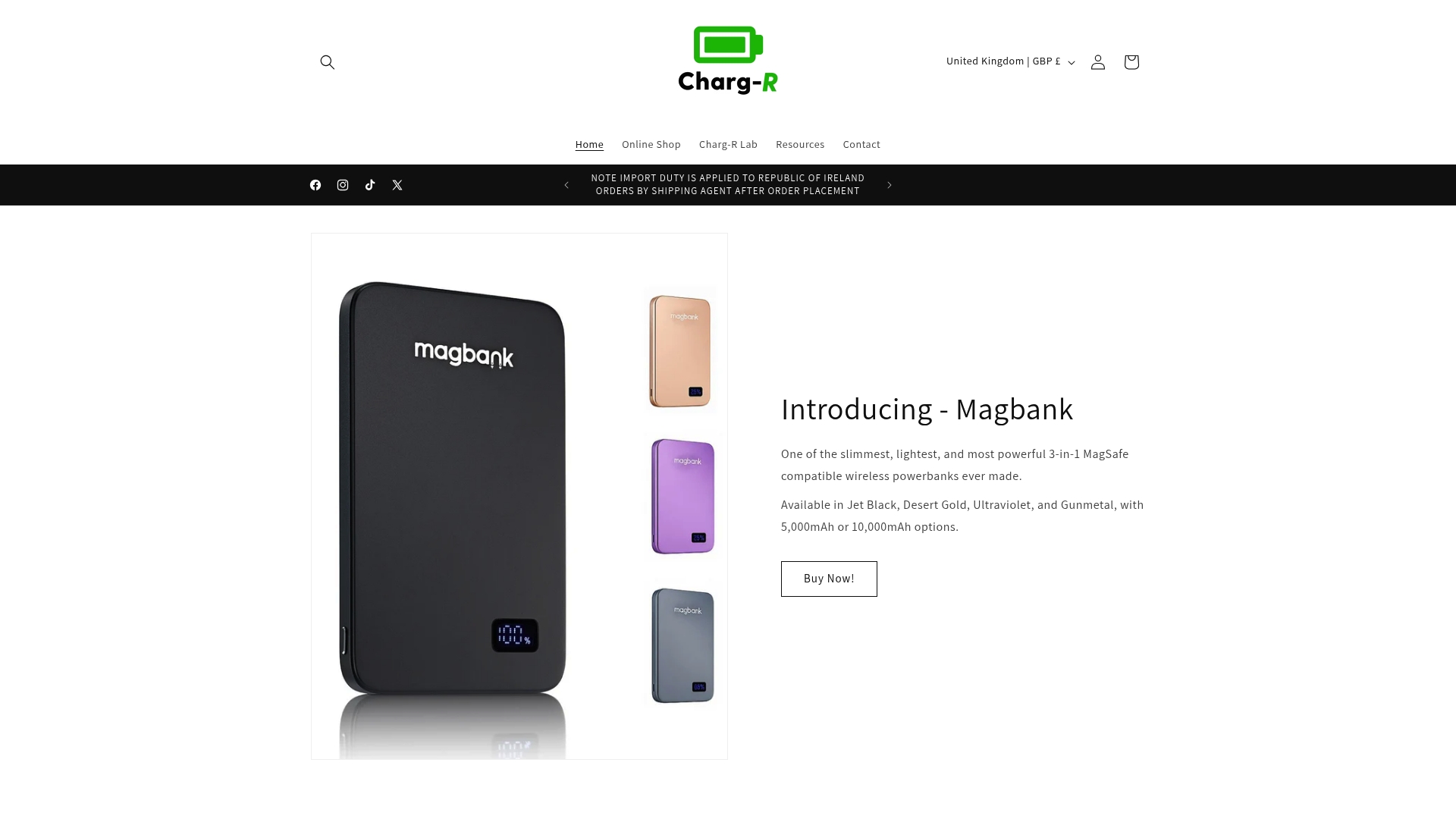
The Slatebank ultra-slim power bank combines 10,000mAh capacity with a profile thin enough to slide into passport holders, providing backup power when wireless charging pads aren’t accessible. Its aircraft-grade aluminium construction matches premium Apple aesthetics whilst surviving the rigours of constant travel.
For travellers managing multiple devices simultaneously, the Travelbud travel docking station consolidates charging through retractable cables that eliminate tangling whilst fitting into compact form factors ideal for hotel desks or airline tray tables. This approach complements wireless charging by handling devices that still require wired connections.
International travellers need the GoPlug travel adapter to ensure safe power delivery across different electrical standards, featuring multiple USB outlets that work alongside wireless chargers to create complete charging solutions regardless of destination.
These accessories integrate seamlessly with wireless charging strategies:
- Slatebank provides emergency power when you’re away from charging surfaces
- Travelbud handles simultaneous wired charging for laptops and tablets alongside wireless phone charging
- GoPlug ensures safe international power delivery protecting both wired and wireless charging equipment
Building a complete travel power ecosystem around quality wireless charging and complementary accessories transforms charging from daily frustration into seamless routine, letting you focus on your journey rather than battery anxiety.
FAQ
What wireless charging standards work best for Apple devices?
Apple devices utilise MagSafe for magnetic alignment and Qi for standard wireless charging, with both protocols ensuring reliable compatibility and efficient power delivery. MagSafe offers superior positioning for iPhone 12 and newer, whilst Qi provides universal compatibility across the Apple ecosystem including AirPods and Apple Watch.
How fast can I charge my iPhone wirelessly?
Wireless chargers with 15W output can halve charging times compared to older 7.5W standards on iPhone 12 and later models. Expect approximately 30 minutes to reach 50% charge with modern fast wireless chargers, making them genuinely practical for brief charging opportunities during travel.
Are all wireless chargers compatible with iPhone cases?
Only chargers certified for MagSafe and Qi standards reliably charge through approved Apple case thickness, typically below 2.5mm. Thick protective cases or those containing metal components can completely block wireless charging, requiring case removal or investment in MagSafe-compatible cases specifically designed for wireless charging.
Can I charge multiple Apple devices with one wireless charger on the go?
Yes, many modern chargers support simultaneous wireless charging for iPhone, AirPods, and Apple Watch, with multi-device designs that fold compactly for travel. These consolidated solutions eliminate cable clutter whilst ensuring all devices receive optimal power overnight or during extended stops, making them ideal for minimalist travellers managing complete Apple ecosystems.