

How Travel Adapters Work
Many travellers assume their travel adapter will convert voltage and protect their devices from electrical damage. This dangerous misconception leads to fried laptops, damaged phones, and ruined holidays. Travel adapters simply change plug shapes to fit foreign outlets, they don’t alter voltage. Understanding this crucial distinction helps you select the right equipment and avoid costly mistakes when charging multiple devices across different countries in 2026.
Table of Contents
- Understanding What Travel Adapters Do – Plug Compatibility, Not Voltage Conversion
- Key Plug Types And Voltage Standards Across Popular Travel Destinations
- Features And Technology In Modern Universal Travel Adapters For Tech-Savvy Users
- Practical Advice For Choosing And Using Travel Adapters Without Damaging Devices
- Explore Charg-R’s Range Of Travel Adapters And Power Solutions
Key takeaways
| Point | Details |
|---|---|
| Adapters change plug shapes only | They do not convert voltage, so check device compatibility before travel. |
| Modern devices are often dual voltage | Most Apple products and electronics work on 100-240V with just a plug adapter. |
| Universal adapters offer convenience | Models with multiple USB ports charge several devices simultaneously across 200+ countries. |
| Safety features prevent damage | Built-in fuses, surge protection, and temperature controls safeguard your electronics. |
| Proper selection depends on destination | Match adapter plug types to your travel countries and device voltage requirements. |
Understanding what travel adapters do – plug compatibility, not voltage conversion
Travel adapters facilitate physical connections between your devices and foreign electrical outlets without changing voltage. This distinction matters enormously. When you plug a British three-pin device into an American two-pin socket using an adapter, you’re simply bridging the physical gap. The electrical current flowing through remains at the local voltage, whether that’s 120V in North America or 240V in Europe.
Most modern electronics, particularly Apple devices, are dual-voltage rated for 100-240V. Your iPhone charger, MacBook power adapter, and iPad work anywhere without voltage conversion. Check the small print on your charger. If it reads “INPUT: 100-240V”, you only need choosing the right plug adapter for that destination.
Single-voltage devices present real risk. Older hair dryers, electric shavers, or heating appliances rated only for 120V will overheat and fail if plugged into 240V European outlets, even with an adapter. These require a separate voltage converter, a bulky transformer that steps down or steps up voltage. The plug compatibility focus of travel adapters means they cannot perform this conversion.
Pro Tip: Before your trip, photograph the voltage specifications printed on each device charger. This quick reference helps you pack correctly and identify which items need voltage converters versus simple plug adapters.
Key plug types and voltage standards across popular travel destinations
The world uses 15 main plug types, with Types A, B, C, D, G, and I appearing most frequently across popular destinations. Each region developed its own electrical standards over the past century, creating today’s fragmented landscape. Understanding these patterns helps you select appropriate adapters before departure.
| Region | Plug Type | Voltage | Frequency |
|---|---|---|---|
| North America | A, B | 120V | 60Hz |
| Continental Europe | C, E, F | 220-240V | 50Hz |
| United Kingdom | G | 230V | 50Hz |
| Australia, China | I | 220-240V | 50Hz |
| India, South Africa | D, M | 230V | 50Hz |
| Japan | A, B | 100V | 50/60Hz |
North American travellers face the biggest adjustment. The Type A and B plugs used across the United States, Canada, and Mexico operate at 120V, whilst most other regions run 220-240V systems. This voltage difference, combined with different plug shapes, requires careful planning. European Type C plugs feature two round pins and work across most continental destinations. The British Type G plug stands out with three rectangular pins and built-in fuses.
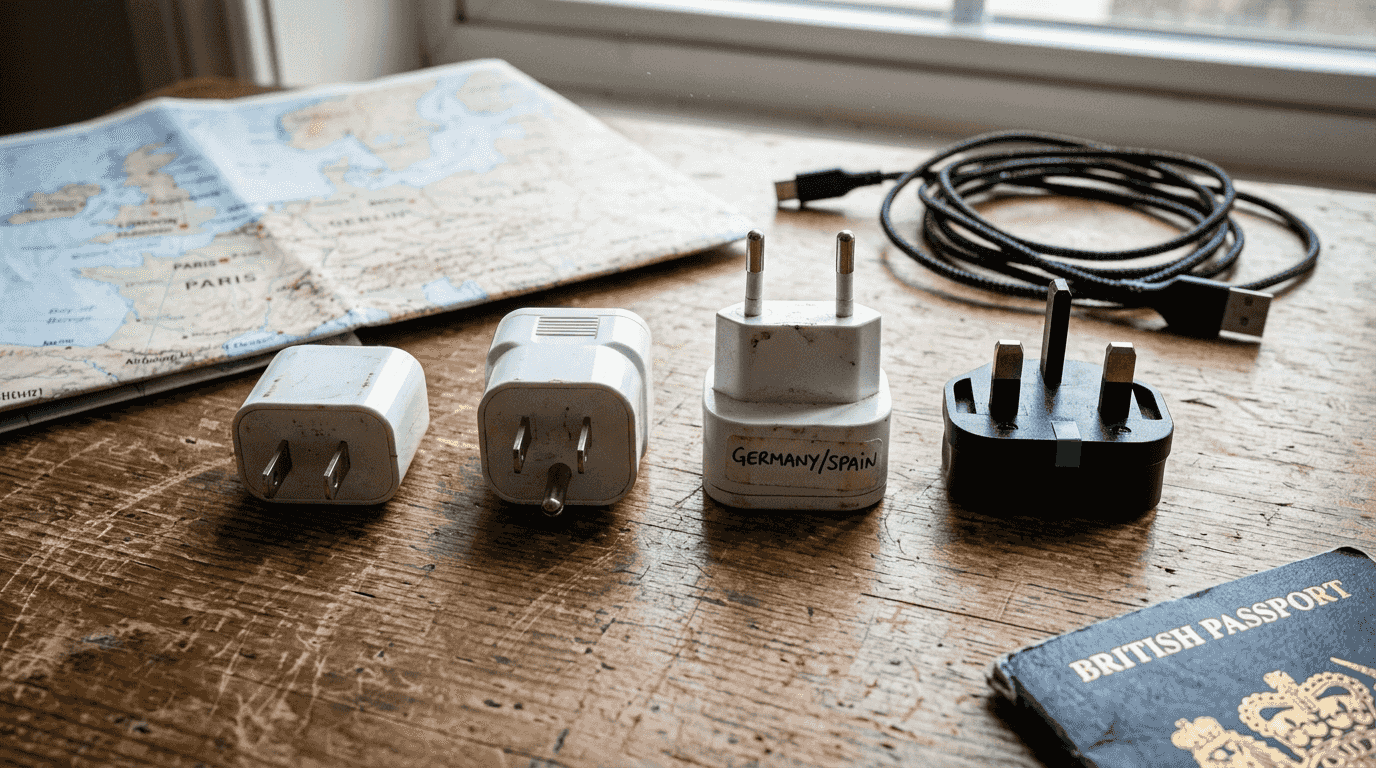
Australia, New Zealand, and China share Type I plugs with two or three flat pins arranged at angles. Type D appears throughout India and surrounding countries with three large round pins. Type M, similar but with thicker pins, serves South Africa. Japan presents unique challenges with 100V systems, the lowest voltage globally, using Type A plugs identical to American outlets but incompatible voltages.
Frequency differences between 50Hz and 60Hz systems rarely affect modern electronics but can impact mechanical devices like clocks or turntables. Voltage mismatches pose far greater risks.
Pro Tip: Screenshot plug type maps on your phone before travelling. Quick visual references beat memorising technical specifications when you’re selecting adapters in airport shops.
Features and technology in modern universal travel adapters for tech-savvy users
Modern universal travel adapters solve multi-country compatibility through mechanical sliding pin systems that configure into different plug types. Push a slider, and two round European pins extend. Slide another direction, and three flat Australian pins emerge. This eliminates carrying multiple single-country adapters.
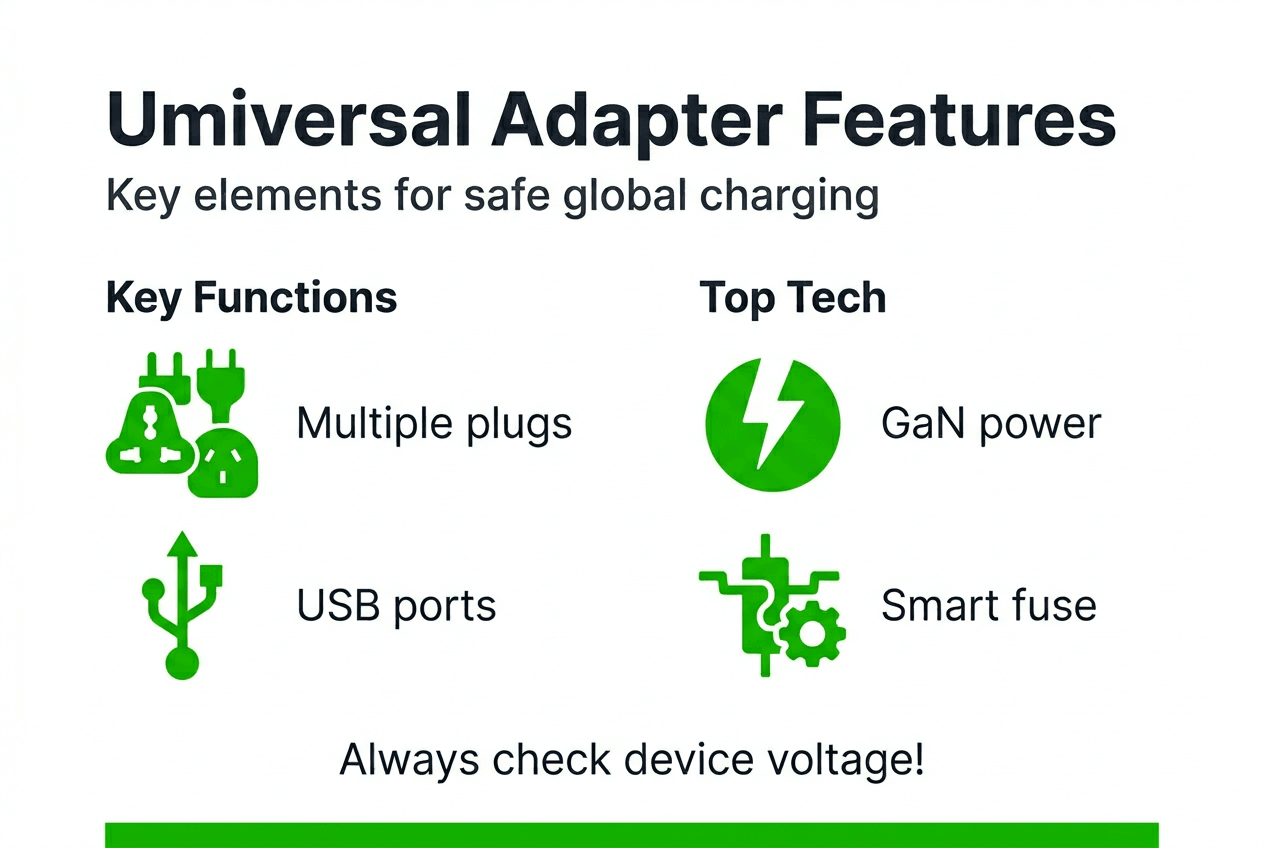
The real innovation lies in integrated USB charging. Quality universal adapters now include multiple USB-A and USB-C ports delivering fast charging to several devices simultaneously. You can charge your iPhone, iPad, Apple Watch, and MacBook from a single wall outlet, freeing up hotel room sockets for travel companions.
| Feature | Benefit | Technical Specification |
|---|---|---|
| GaN charging technology | Faster charging, smaller size | Up to 70W output |
| Multiple USB ports | Simultaneous device charging | 4-6 ports typical |
| Universal pin system | 200+ country compatibility | Types A, B, C, D, E, F, G, I, J, K, L |
| Built-in safety features | Device protection | Fuses, surge protection, temperature control |
| Compact design | Easy packing | Palm-sized form factor |
Gallium Nitride (GaN) technology represents the biggest recent advancement. GaN chargers generate less heat and achieve higher power outputs in smaller packages than traditional silicon-based chargers. A 70W GaN adapter can fast-charge a MacBook Pro whilst simultaneously topping up your iPhone and AirPods, something impossible with older designs.
Safety features distinguish premium adapters from budget alternatives. Built-in fuses and temperature controls prevent overcurrent damage and thermal runaway. Surge protection guards against voltage spikes common in developing countries with unstable electrical grids. Safety shutters block foreign objects from live contacts, crucial when travelling with children.
Compatibility with over 200 countries sounds impressive but verify the specific countries you’re visiting. Some adapters exclude less common plug types or work better in certain regions. The GoPlug travel adapter exemplifies these modern features with retractable pins, multiple USB outlets, and comprehensive country coverage in a compact package designed for tech enthusiast needs.
Pro Tip: Test your universal adapter’s mechanical sliders before travelling. Stiff or sticky mechanisms indicate poor build quality that will frustrate you abroad. Quality adapters slide smoothly between configurations.
Practical advice for choosing and using travel adapters without damaging devices
Start by auditing your devices. List every electronic item you’ll travel with and note its voltage rating. This simple step prevents misuse that causes damage abroad. Dual-voltage items need only plug adapters. Single-voltage devices require voltage converters, adding bulk and expense to your kit.
- Verify destination electrical standards before purchasing adapters. Countries sometimes use multiple plug types, particularly former colonies transitioning between systems.
- Choose universal adapters with safety certifications from recognised bodies like CE, FCC, or RCM. These marks indicate testing against electrical safety standards.
- Prioritise adapters offering multiple USB ports if you carry several devices. Charging everything overnight from one adapter simplifies your routine.
- Pack a backup adapter for extended trips. Devices rotated across multiple countries fail faster due to repeated mechanical stress and electrical variations.
- Test unfamiliar outlets cautiously before connecting expensive electronics. Try a phone charger first rather than risking your laptop.
Never force adapters into sockets. If pins don’t align naturally, you likely have the wrong configuration or plug type. Forcing connections damages both adapter and outlet, potentially creating electrical hazards. Some outlets, particularly older European installations, require firm insertion but never violent force.
Regularly inspect your adapter for damage. Check for:
- Cracked housing exposing internal components
- Bent or loose pins that don’t retract properly
- Scorch marks indicating overheating
- Wobbling when inserted into outlets
- Burnt plastic smell during use
Hotel electrical systems occasionally trip breakers or trigger adapter safety features. Don’t assume your adapter is faulty. Try different outlets or ask reception about known electrical issues. Some hotels use master switches that cut power to outlets when rooms are unoccupied, confusing travellers accustomed to always-on power.
Pro Tip: Photograph your adapter’s country compatibility chart. When locals ask what you need, showing the image overcomes language barriers better than describing “the three-pin rectangular one.”
Consider selecting adapters designed for durability when planning multiple international trips. Premium models withstand repeated configuration changes better than budget alternatives. Understanding how travel chargers work helps you make informed decisions about features worth paying extra for versus marketing gimmicks.
Explore Charg-R’s range of travel adapters and power solutions
Equipping yourself with reliable charging solutions transforms travel from a logistical challenge into seamless connectivity. Charg-R specialises in innovative power accessories designed for frequent international travellers who demand both functionality and portability.
The GoPlug travel adapter combines universal plug compatibility with multiple USB outlets, letting you charge phones, tablets, and laptops simultaneously across over 200 countries. Its compact design fits easily in hand luggage whilst delivering reliable performance trip after trip. For extended journeys where outlets prove scarce, the Slatebank 100W powerbank provides high-capacity backup charging in a remarkably slim profile. Fast charging technology ensures your devices stay powered during long flights or remote excursions. The Travelbud 4-in-1 travel docking station integrates multiple charging functions into one elegant solution, reducing cable clutter in hotel rooms. Each product emphasises safety features, compatibility with Apple devices, and the durability frequent travellers require.
FAQ
What is the difference between a travel adapter and a voltage converter?
A travel adapter changes the physical plug shape so your device fits foreign outlets, nothing more. Voltage converters actually transform the electrical current from one voltage to another, like stepping 240V down to 120V. Most modern electronics are dual voltage and only need adapters, whilst older single-voltage appliances require converters to avoid damage.
Can I use a travel adapter with all my Apple devices safely?
Yes, virtually all Apple devices manufactured in the past decade support 100-240V dual voltage operation. Your iPhone, iPad, MacBook, and Apple Watch chargers work globally with just plug adapters. Always verify the voltage rating printed on your specific charger to confirm compatibility, then explore Apple charging accessories optimised for international use.
How do I ensure my travel adapter won’t get damaged during frequent international use?
Never force adapters into outlets that don’t accept them naturally, as this bends pins and cracks housings. Inspect your adapter before each trip for physical damage, loose components, or scorch marks. Choose adapters built with robust mechanical systems designed for repeated configuration changes, and consider selecting models rated for durability if you travel internationally more than twice yearly.
What safety features should I look for in a travel adapter?
Prioritise adapters with built-in fuses that prevent overcurrent from reaching your devices during electrical faults. Temperature control systems shut down charging if components overheat, whilst surge protection guards against voltage spikes. Safety shutters prevent accidental contact with live electrical parts, particularly important when travelling with children. These essential safety features distinguish quality adapters from dangerous budget alternatives.