

What Is mAh in Power Banks? A Practical Guide
Most people assume a 10,000 mAh power bank fully charges their 3,000 mAh smartphone three times. Reality delivers about two charges. The gap stems from voltage conversion and efficiency losses that reduce usable capacity by 20 to 30 per cent. This guide breaks down mAh ratings, explains why theoretical capacity differs from real-world performance, and helps you choose the right power bank for your devices.
Table of Contents
- Understanding mAh In Power Banks
- Voltage And Conversion Impact On Capacity
- Efficiency Losses And Voltage Conversion
- Real-World Charging Capacity
- Common Misconceptions About mAh
- Selecting The Right mAh Capacity
- Trade-Offs Between Capacity And Portability
- Explore Reliable High-Capacity Power Banks For Your Needs
- Frequently Asked Questions
Key takeaways
| Point | Details | |-------|---------|| | mAh measures electric charge | It indicates battery charge capacity, not usable energy delivered to devices. | | Voltage conversion reduces output | Energy conversion losses during voltage step-up from battery’s 3.7V to device charging voltage 5V reduce usable capacity by 20 to 30 per cent. | | Real charging capacity is lower | A 10,000 mAh power bank typically provides about two full smartphone charges after efficiency losses. | | Device consumption varies | Actual charge cycles depend on your device’s battery size, usage patterns, and charging behaviour. | | Balance capacity and portability | Higher mAh ratings mean more weight and size, requiring trade-offs based on your mobility needs. |
Understanding mAh in power banks
The term mAh stands for milliampere-hour, a unit measuring electric charge quantity. It tells you how much charge a battery can store and theoretically deliver over time. One milliampere-hour means a battery can provide one milliampere of current for one hour, or higher currents for shorter durations.
Typical smartphone batteries range from 3,000 to 5,000 mAh, whilst power banks span 5,000 to 30,000 mAh or more. A 10,000 mAh power bank nominally stores ten thousand milliampere-hours of charge at its internal battery voltage.
These mAh ratings represent nominal battery capacity at the cell’s voltage, usually 3.7 volts for lithium-ion batteries. The figure reflects potential runtime or battery life under ideal conditions. However, mAh measures charge quantity, not voltage or total energy directly.
Key distinctions include:
- mAh quantifies charge stored, not energy delivered
- Ratings assume constant voltage within the battery cell
- Nominal capacity differs from usable output capacity
- Higher mAh suggests longer potential runtime, but voltage conversion affects real performance
Understanding mAh as a charge measure rather than energy output sets the foundation for grasping why power banks don’t deliver their full rated capacity to your devices.
Voltage and conversion impact on capacity
Power bank batteries operate internally at about 3.7 volts, the standard for lithium-ion cells. Yet USB charging outputs require 5 volts or higher for modern fast charging protocols. This voltage step-up demands energy conversion within the power bank, fundamentally altering usable capacity.
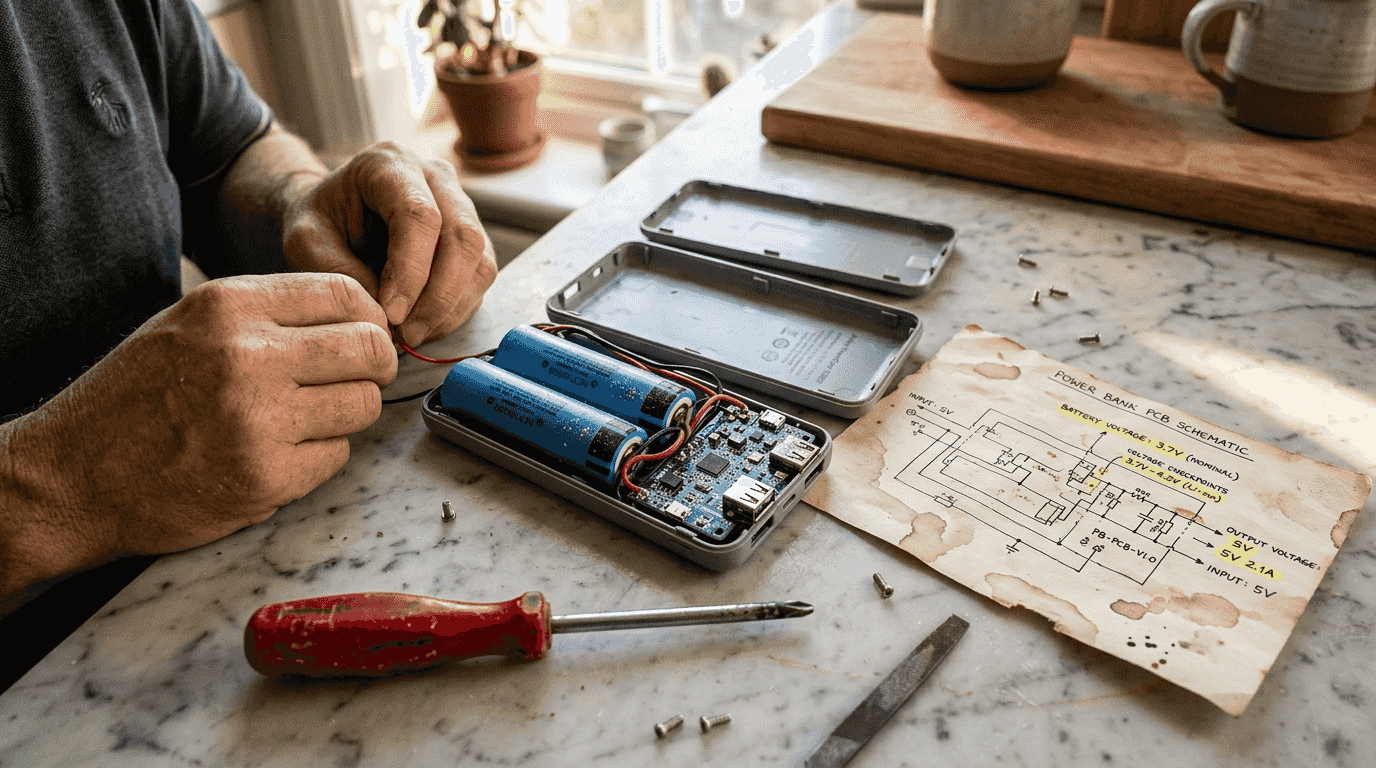
When voltage increases from 3.7V to 5V, the available charge in mAh decreases proportionally to conserve energy. Energy conversion losses during voltage step-up typically cause 20 to 30 per cent loss in actual usable capacity. The circuit’s inefficiency consumes energy as heat.
A more comprehensive energy measure is watt-hours (Wh), calculated as: Wh = (mAh × Voltage) / 1000. This formula accounts for both charge and voltage, giving true energy capacity. For example, a 10,000 mAh power bank at 3.7V holds 37 Wh, but delivering 5V output reduces effective capacity to around 7,400 mAh at USB voltage.
Comparing mAh to Wh for typical power bank ratings:
| Rated mAh | Battery Voltage | Energy (Wh) | Effective Output mAh at 5V |
|---|---|---|---|
| 5,000 | 3.7V | 18.5 | ~3,700 |
| 10,000 | 3.7V | 37 | ~7,400 |
| 20,000 | 3.7V | 74 | ~14,800 |
| 30,000 | 3.7V | 111 | ~22,200 |
Watt-hours provide accurate energy comparisons across devices and voltages. Always check Wh ratings when evaluating power bank specs for true capacity.
Efficiency losses and voltage conversion
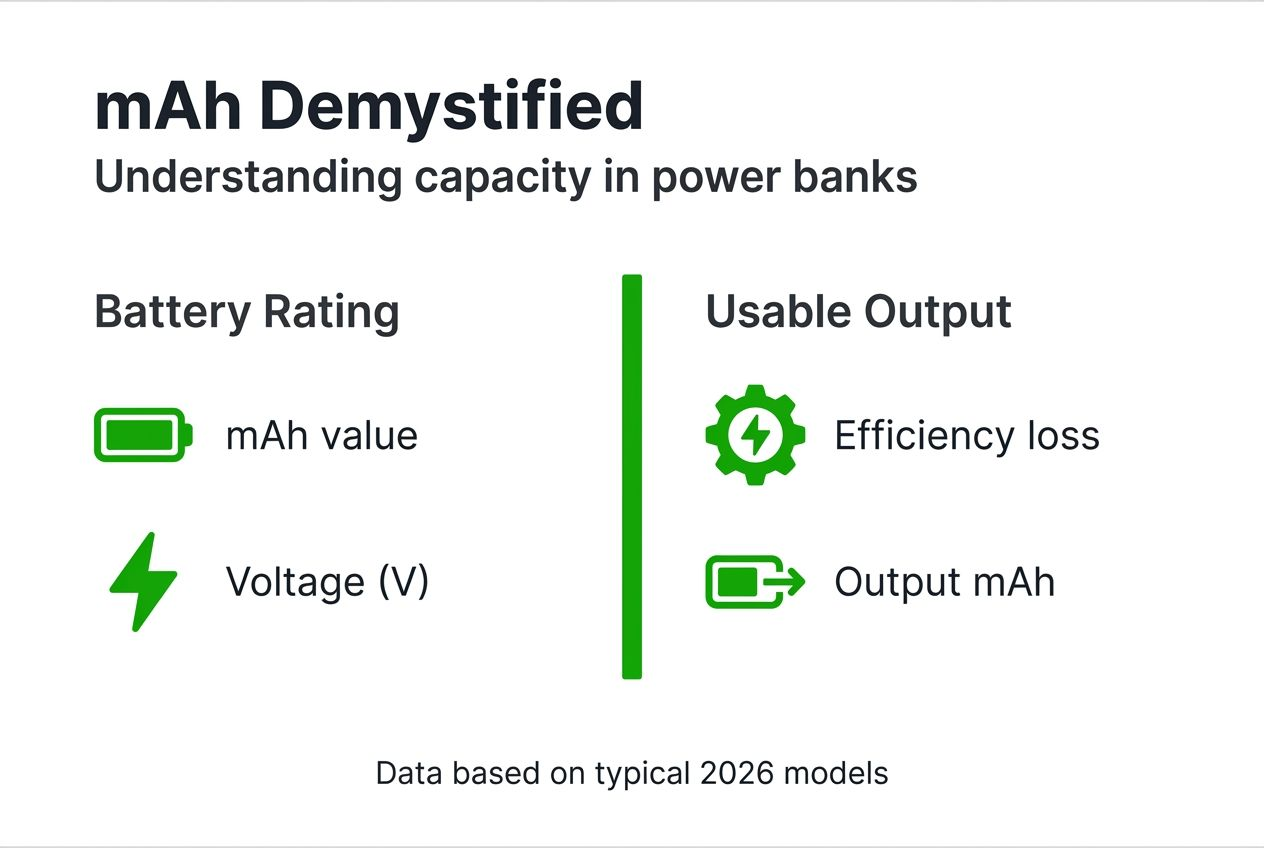
Voltage conversion circuits inside power banks lose energy during operation. Usable capacity is generally 70 to 80 per cent of the rated mAh at battery voltage due to conversion inefficiencies. Heat dissipation, circuit resistance, and regulator overhead consume the missing capacity.
Typical efficiency ranges include:
- Budget power banks: 60 to 70 per cent efficiency
- Mid-range models: 70 to 80 per cent efficiency
- Premium power banks: 80 to 85 per cent efficiency
- No power bank achieves 100 per cent efficiency
Design quality significantly affects these losses. Cheaper components waste more energy. Premium circuitry with better voltage regulators and lower resistance pathways minimises loss, delivering more usable power to your devices.
Why 100 per cent capacity delivery remains impossible: conversion circuits require power to operate, resistance in wiring and connectors generates heat, and charge management systems consume energy. Physics limits perfect efficiency.
Pro Tip: Check product specifications for stated output capacity or efficiency ratings. Reputable brands list usable mAh at 5V output, not just internal battery mAh. Compare these figures to assess real power bank energy losses and value.
Understanding these losses helps set realistic expectations. A 10,000 mAh power bank delivers roughly 7,000 to 8,000 mAh of usable charge to devices after accounting for voltage conversion and circuit efficiency.
Real-world charging capacity
Translating mAh ratings into device charges requires accounting for efficiency losses and device battery sizes. A 10,000 mAh power bank with 75 per cent efficiency delivers about 7,500 mAh usable at 5V. Charging a 3,500 mAh smartphone battery yields roughly two full charges, not three.
Calculating expected charges:
- Determine power bank’s rated mAh capacity
- Multiply by efficiency factor (0.70 to 0.80) for usable capacity
- Divide usable capacity by device battery mAh
- Round down to account for charging protocol overhead
Device battery size and efficiency heavily impact charge cycles. Tablets with 8,000 to 10,000 mAh batteries drain power banks faster. Device power consumption and usage patterns significantly affect how long a single charge lasts, even with the same battery capacity.
Comparison of device battery sizes versus estimated charge counts:
| Device Battery Size | 10,000 mAh Power Bank | 20,000 mAh Power Bank | 30,000 mAh Power Bank |
|---|---|---|---|
| 3,000 mAh smartphone | ~2 charges | ~5 charges | ~7 charges |
| 4,500 mAh smartphone | ~1.5 charges | ~3 charges | ~5 charges |
| 8,000 mAh tablet | ~0.9 charges | ~1.8 charges | ~2.8 charges |
| 10,000 mAh tablet | ~0.7 charges | ~1.5 charges | ~2.2 charges |
For practical capacity planning, consider your portable charging setup needs. Heavy users benefit from higher capacity models, whilst occasional users find 10,000 mAh sufficient for daily top-ups.
Common misconceptions about mAh
Many buyers mistakenly believe the mAh rating directly equals the number of phone charges. This ignores voltage conversion and efficiency losses that significantly reduce delivered capacity. A 10,000 mAh power bank doesn’t charge a 3,000 mAh phone three times.
Frequent misunderstandings include:
- Assuming mAh rating translates 1:1 to device charges
- Ignoring voltage differences between battery cells and USB output
- Believing higher mAh always means better performance regardless of efficiency
- Trusting marketing claims without checking actual output specifications
- Expecting 100 per cent capacity transfer from power bank to device
Voltage conversion and efficiency cut usable capacity by 20 to 30 per cent minimum. Actual device charging depends on circuit quality, charging protocol, and device power management. Higher mAh doesn’t guarantee superior performance if the power bank’s circuitry wastes energy.
Marketing often exaggerates capacity. Some brands advertise battery cell mAh without clarifying reduced USB output capacity. Others omit efficiency ratings entirely. Understanding why slim power banks prioritise efficient circuitry helps identify quality products.
The difference between nominal specs and real usability matters most when comparing products. Look beyond headline mAh figures to output ratings, efficiency percentages, and user reviews documenting actual charge cycles. Informed selection requires separating marketing claims from engineering reality.
Selecting the right mAh capacity
Choosing appropriate power bank capacity starts with your device battery specs and usage habits. Calculate required capacity by multiplying device battery mAh by desired charge count, then add 30 per cent to offset efficiency losses.
Selection process:
- Identify your primary device’s battery capacity in mAh
- Decide how many full charges you need between power bank recharges
- Multiply device mAh by desired charges
- Add 30 per cent for efficiency losses (multiply by 1.3)
- Select power bank with rating meeting or exceeding this calculated capacity
- Consider additional devices requiring simultaneous charging
Account for 20 to 30 per cent efficiency loss in every calculation. A 15,000 mAh power bank delivers roughly 10,500 to 12,000 mAh usable after conversion losses. Plan capacity accordingly.
Typical use cases require different approaches:
- Light daily use: 5,000 to 10,000 mAh for single device top-ups
- Regular commuting: 10,000 to 15,000 mAh for daily full charges
- Travel and heavy use: 20,000 to 30,000 mAh for multiple devices and extended trips
- Power users with tablets: 20,000+ mAh minimum for adequate capacity
Balance capacity against portability needs. A 30,000 mAh power bank provides substantial power but adds significant weight. Consider your portable charging workflow and whether you prioritise capacity or convenience.
Pro Tip: Prioritise higher watt output (18W or above) for faster charging speeds and better multi-device charger support. Output power matters as much as capacity for practical usability.
Trade-offs between capacity and portability
Higher mAh ratings correlate with larger physical size and heavier weight. Power banks with greater capacity require more battery cells, increasing dimensions and mass. A 30,000 mAh unit might weigh 500 to 700 grams, whilst a 10,000 mAh model stays under 200 grams.
Daily use versus travel creates different priorities. Commuters benefit from slim, lightweight models fitting coat pockets. Travellers on multi-day trips accept heavier units for extended device support without mains charging access.
Convenience sometimes demands choosing slightly lower capacity. Carrying 400 grams extra daily for rare high-capacity needs may not justify the burden. Assess realistic usage frequency.
Trade-off examples between 10,000 mAh and 30,000 mAh power banks:
- 10,000 mAh: 180 to 220g weight, pocket-sized, 1 to 2 smartphone charges, ideal daily carry
- 30,000 mAh: 500 to 700g weight, requires bag, 5 to 7 smartphone charges, best for extended travel
Pros and cons of different capacity ranges:
- 5,000 to 10,000 mAh: Ultra-portable, emergency backup, limited multi-device support, frequent recharging needed
- 10,000 to 20,000 mAh: Balanced portability and capacity, 2 to 4 smartphone charges, suitable for most users, moderate weight
- 20,000 to 30,000 mAh: Extended capacity, multiple device charging, heavier and bulkier, travel-focused, infrequent recharging
Choose capacity matching your actual mobility patterns. Overbuying creates unnecessary weight, whilst underbuying leaves you without power when needed.
Explore reliable high-capacity power banks for your needs
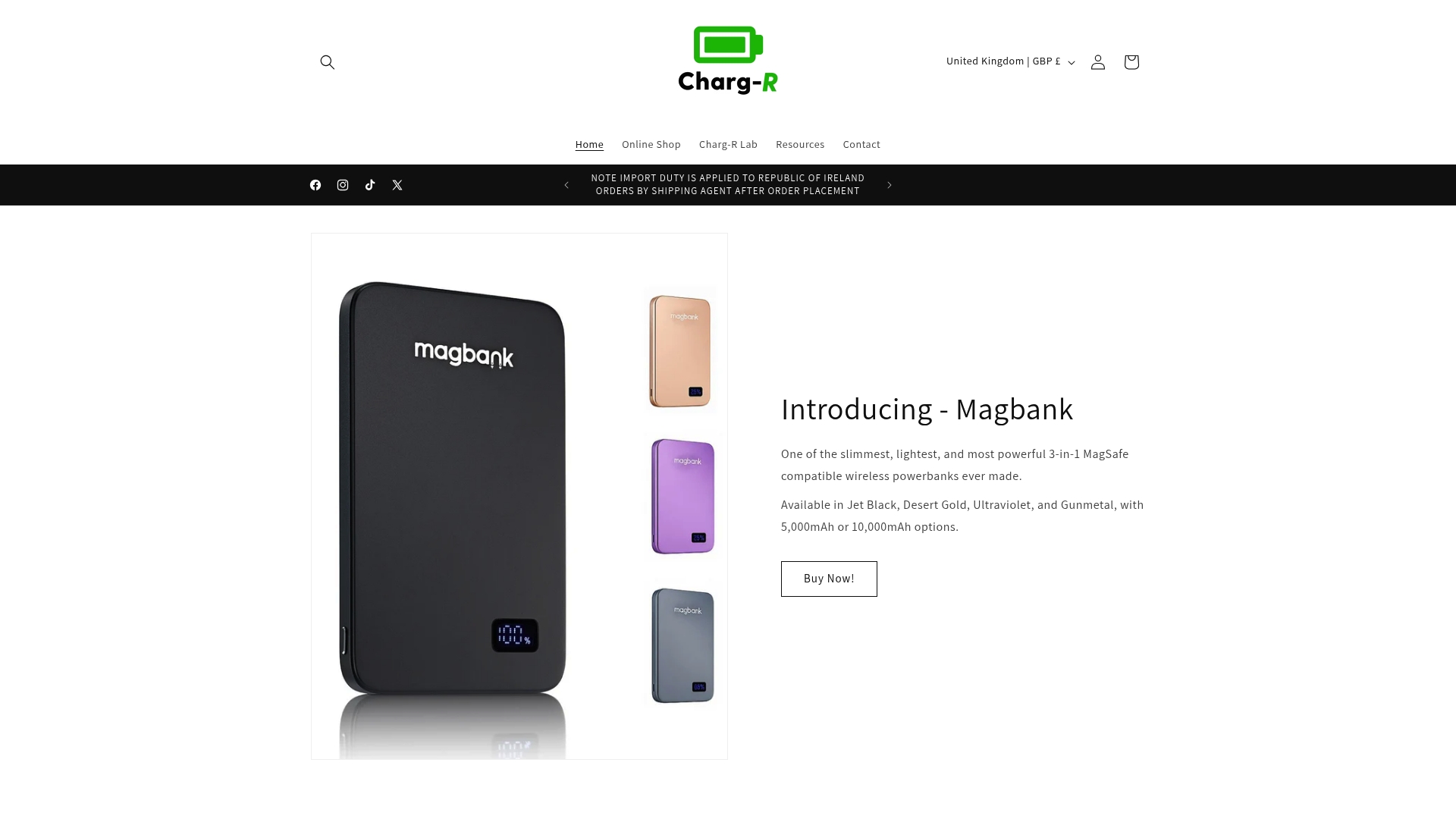
Finding the right balance between capacity, efficiency, and portability becomes simpler with quality options designed for modern device demands. Charg-R offers power banks engineered to maximise usable output whilst maintaining practical form factors.
The Slatebank 20,000mAh ultra slim powerbank delivers substantial capacity without excessive bulk, ideal for travellers requiring multi-day device support. Its efficient circuitry minimises conversion losses.
For users wanting visual feedback, the Brickbank 20,000mAh powerbank with display shows precise remaining capacity, eliminating guesswork about available charge. This transparency helps plan charging schedules during extended outings.
Daily commuters benefit from the Retractabank 10,000mAh powerbank, combining adequate capacity with lightweight portability. Its integrated cables reduce carrying accessories separately.
Each model addresses efficiency and capacity trade-offs through premium components and circuit design, ensuring you receive maximum usable power from the rated mAh capacity. Explore detailed specifications to match your device requirements and mobility preferences.
Frequently asked questions
What does mAh mean in power banks?
mAh stands for milliampere-hour, measuring the electric charge a battery can store and deliver. It indicates the battery’s charge capacity at its internal voltage, typically 3.7 volts for lithium-ion cells. Higher mAh ratings suggest longer potential runtime, though actual usable capacity depends on voltage conversion efficiency.
How does mAh differ from watt-hours?
mAh measures electric charge quantity, whilst watt-hours (Wh) measure total energy by accounting for both charge and voltage. Calculate Wh using the formula: (mAh × Voltage) / 1000. Wh provides accurate energy comparisons across different devices and voltages, making it more reliable for evaluating true power bank capacity.
Why do power banks deliver fewer charges than mAh suggests?
Voltage conversion from the battery’s 3.7V to USB output’s 5V or higher reduces available capacity by 20 to 30 per cent through energy losses. Circuit inefficiency, heat dissipation, and component resistance consume additional power. These combined factors mean a 10,000 mAh power bank delivers roughly 7,000 to 8,000 mAh usable charge.
How do I choose the right power bank capacity?
Multiply your device’s battery mAh by desired charge count, then add 30 per cent for efficiency losses. Consider your usage pattern: light users need 5,000 to 10,000 mAh, regular users benefit from 10,000 to 20,000 mAh, and heavy travellers require 20,000+ mAh. Balance capacity against portability and weight constraints.
Does higher mAh always mean better performance?
Not necessarily. Circuit efficiency, output wattage, and build quality significantly impact real performance. A 20,000 mAh power bank with poor efficiency might deliver less usable power than a well-engineered 15,000 mAh model. Check output specifications, efficiency ratings, and user reviews rather than relying solely on headline mAh figures.
How does voltage conversion affect power bank efficiency?
Stepping up voltage from battery cells (3.7V) to USB output (5V or higher) inherently loses energy through circuit operation and heat generation. Quality power banks achieve 75 to 85 per cent efficiency, whilst budget models may drop to 60 to 70 per cent. This conversion loss directly reduces the usable charge your devices receive.