

Why Use Wireless Charging When You Travel?
Why use wireless charging: 40% faster Apple travel 2026
Wireless charging often gets dismissed as slower and potentially harmful to battery health, but these concerns are largely unfounded. For Apple device users who travel frequently, wireless charging delivers remarkable convenience without compromising device longevity. Battery degradation rates differ by less than 2% annually between wireless and wired methods. This article explores how wireless charging works, its genuine benefits for travellers, and how to select the right charger for your needs.
Table of Contents
- Introduction To Wireless Charging
- Compatibility With Apple Devices And Accessories
- Charging Efficiency And Trade-Offs
- Safety Features In Wireless Charging
- Advantages Over Wired Charging For Travellers
- Common Misconceptions About Wireless Charging
- Choosing The Right Wireless Charger For Travel
- Conclusion And Practical Tips
- Explore Our Wireless Charging Solutions For Travel
Key takeaways
| Point | Details |
|---|---|
| Qi standard compatibility | Apple devices from iPhone 8 onwards support Qi wireless charging, enabling unified power solutions. |
| Travel convenience | Eliminates cable clutter and reduces port wear, making packing lighter and device management simpler. |
| Charging efficiency | Wireless delivers 7.5W to 15W, ideal for overnight charging but slower than wired fast charging. |
| Safety protections | Foreign object detection and temperature regulation safeguard devices during charging sessions. |
| Multi-device support | Charging pads accommodate iPhone, AirPods, and Apple Watch simultaneously, streamlining travel power needs. |
Introduction to wireless charging
Wireless charging operates through electromagnetic induction, transferring energy between a charging pad and your device without physical connection. The Qi wireless charging standard powers this technology and enjoys full support from Apple devices starting with iPhone 8. This compatibility extends to AirPods Pro and Apple Watch Series 3 and beyond, creating a unified ecosystem that simplifies travel charging.
Eliminating cables transforms how you interact with power. You simply place your device on a pad and pick it up when ready, no fumbling with connectors required. This seamless experience proves invaluable when you’re navigating airports, hotel rooms, or co-working spaces.
Over 90% of Apple devices in use today are compatible with Qi wireless charging, making it a practical standard rather than a niche technology. MagSafe builds upon Qi by adding magnetic alignment, which optimises charging speed and connection stability. This enhancement ensures your device sits perfectly positioned on the pad, maximising efficiency.
Key wireless charging features for Apple users:
- Electromagnetic induction transfers power without cables or connectors
- Qi standard compatibility across iPhone, AirPods, and Apple Watch models
- Magnetic charging benefits through MagSafe technology improve alignment
- Unified charging solutions reduce the number of accessories you need to pack
- Quick placement and pickup enhance convenience during busy travel days
Compatibility with Apple devices and accessories
Apple’s commitment to Qi wireless charging spans multiple product lines, creating genuine ecosystem advantages. iPhone models from 8 onwards charge wirelessly, as do AirPods Pro and Apple Watch Series 3 and later. This widespread compatibility means one charging pad can service your entire Apple collection.
Multi-device charging pads revolutionise travel power management. Instead of carrying separate cables and adapters for each device, you pack a single pad that handles everything simultaneously. Your iPhone charges alongside your AirPods and Apple Watch, eliminating the morning scramble to locate the right cable.
Travel-focused accessories prioritise compact design and multifunctionality. Modern wireless chargers fold flat, weigh minimal amounts, and often include integrated stands for hands-free viewing. This design philosophy aligns perfectly with traveller priorities around space efficiency and versatility.
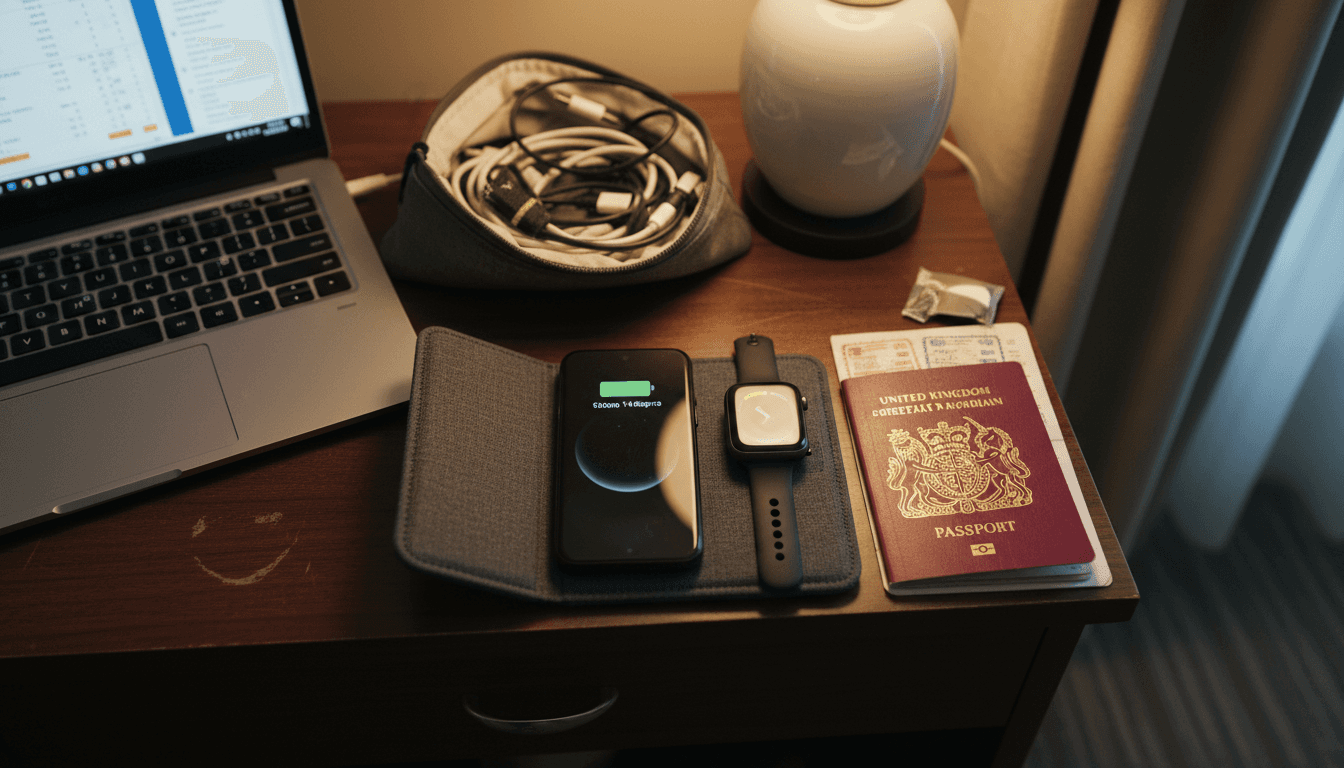
MagSafe accessories enhance this experience further. The magnetic connection prevents misalignment issues that can slow charging or prevent it entirely. You gain confidence that your device charges reliably overnight, even if you bump the nightstand.
Compatibility highlights for travellers:
- Apple charging accessories support iPhone 8 and newer, AirPods Pro, Apple Watch Series 3+
- Shared Qi ecosystem reduces accessory quantity by enabling one charger for multiple devices
- Multi-device wireless chargers charge three devices simultaneously from one power source
- Compact form factors prioritise portability without sacrificing charging capability
- MagSafe compatibility ensures stable connections and optimal power transfer rates
Charging efficiency and trade-offs
Wireless charging operates at 70% to 80% energy efficiency compared to wired charging’s 90%+ efficiency. This difference stems from energy loss during electromagnetic transfer and alignment gaps between coil and device. Whilst less efficient overall, the practical impact remains modest for most travel scenarios.
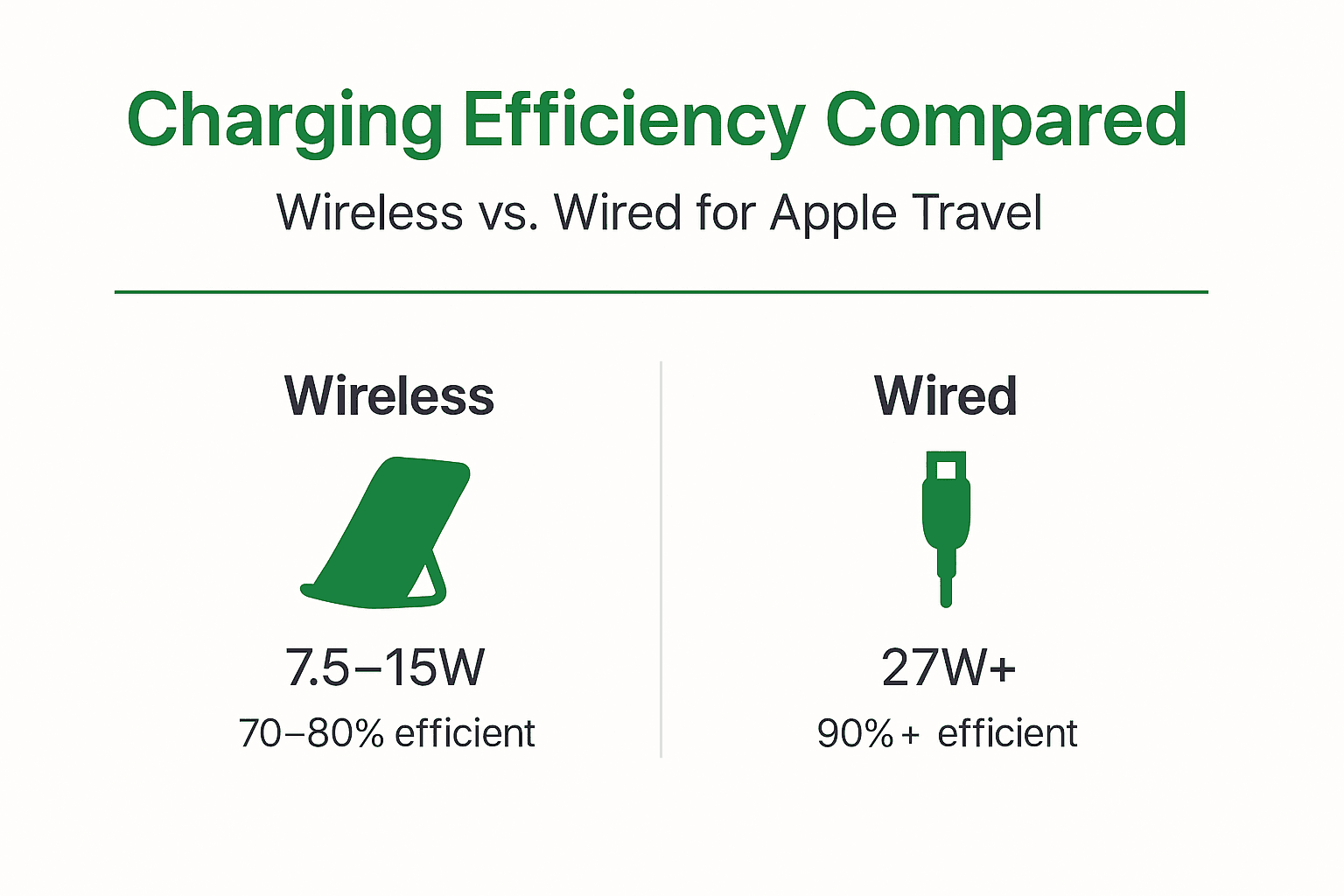
Typical wireless charging speed ranges from 7.5W to 15W, notably slower than modern wired fast chargers delivering 27W or more. This speed difference matters primarily when you need urgent power top-ups between meetings or flights. For overnight charging or casual daytime sessions, wireless speeds prove entirely adequate.
Alignment and case thickness influence efficiency significantly. Devices positioned off-centre on charging pads receive reduced power, extending charge times. Thick protective cases create distance between charging coils, impeding energy transfer. Understanding these factors helps you maximise charging performance.
Pro tip: Place your device centrally on the charging pad and remove cases thicker than 3mm to ensure optimal power transfer and faster charging times.
| Charging method | Power output | Efficiency | Best use case |
|---|---|---|---|
| Wireless standard | 7.5W-15W | 70%-80% | Overnight charging, casual desk use |
| Wired standard | 20W | 90%+ | Daily charging, moderate speed needs |
| Wired fast charging | 27W+ | 90%+ | Urgent top-ups, rapid pre-travel charging |
Practical efficiency considerations:
- Wireless suits overnight hotel charging where speed matters less than convenience
- Wired fast charging excels for quick airport lounge power boosts
- Coil alignment directly impacts charging speed and energy waste
- Case removal improves efficiency by up to 15% in some scenarios
- Choosing wireless chargers with higher wattage ratings compensates somewhat for efficiency losses
Safety features in wireless charging
Modern wireless chargers incorporate sophisticated safety mechanisms that protect both devices and users. Foreign object detection technology scans the charging surface continuously, halting power transfer if it detects metal objects, coins, or keys. Foreign object detection technology prevents device damage 98% of the time by stopping charging immediately when hazards appear.
Foreign object detection technology in wireless chargers prevents device damage 98% of the time by stopping charging if an unwanted object is detected.
Temperature regulation systems monitor heat levels throughout charging sessions. If the pad or device temperature exceeds safe thresholds, charging automatically reduces or pauses until conditions normalise. This prevents the overheating scenarios that concern many potential users.
Voltage control ensures consistent power delivery regardless of input fluctuations. Your device receives steady, appropriate power even when hotel electrical systems vary. This protection proves particularly valuable for international travellers encountering different power standards.
MagSafe compatibility adds another safety layer through guaranteed alignment. Magnets position your device precisely over charging coils, eliminating partial contact risks that could generate excessive heat. This mechanical safeguard complements electronic protections.
Pro tip: Always use certified Qi and Apple-approved wireless chargers to ensure all safety features function correctly and avoid potential device damage from uncertified accessories.
Built-in safety protections:
- Foreign object detection scans continuously and halts charging when metal debris appears
- Temperature sensors prevent overheating by reducing power or pausing charging sessions
- Voltage regulation delivers consistent power despite variable input from different power sources
- Wireless charging safety features match or exceed wired charging protections
- MagSafe safety and compatibility ensures proper alignment reduces heat generation risks
Advantages over wired charging for travellers
Wireless charging eliminates port wear from repeated cable insertions and removals. Lightning and USB-C ports endure stress with each connection, potentially loosening over time and causing unreliable charging. Wireless charging preserves port integrity by removing this mechanical friction entirely.
Cable clutter vanishes when you adopt wireless charging for travel. Instead of managing multiple cables that tangle in luggage, you pack one or two slim charging pads. This simplification extends to hotel room organisation, where you create a tidy charging station rather than a web of cables.
Compact wireless chargers weigh considerably less than equivalent wired setups. A single multi-device pad replaces three separate cables and potentially multiple power adapters. This weight and space savings matter when you’re optimising carry-on luggage or managing weight restrictions.
Usability improvements extend beyond physical convenience. You grab your phone from the charging pad without disconnecting anything, check notifications, and set it back down to resume charging. This effortless interaction suits the fragmented attention patterns of travel days.
Transitioning to wireless charging for travel:
- Inventory your Apple devices to confirm Qi compatibility across all items
- Select wireless chargers matching your power needs and device count
- Invest in multi-device charging pads for travel to consolidate accessories
- Practise efficient charging placement to maximise speed and reliability
- Develop a portable charging workflow that integrates wireless pads with powerbanks
Travel-specific wireless advantages:
- Reduced port wear extends device lifespan by eliminating mechanical connector stress
- Minimal cable management simplifies packing and reduces luggage weight
- Multi-device capability consolidates charging infrastructure into single accessories
- Quick placement and pickup supports multitasking without cable hindrance
- Compact designs integrate seamlessly into travel bags and hotel room spaces
Common misconceptions about wireless charging
Myth: Wireless charging significantly damages battery health over time. Reality: Studies demonstrate battery degradation differs by less than 2% annually between wireless and wired charging methods. Both approaches subject batteries to similar charge cycles and thermal conditions, producing comparable longevity.
Myth: Wireless charging remains too slow for practical daily use. Reality: Whilst slower than fast wired charging, 7.5W to 15W wireless charging fully powers devices during overnight sessions. Reserve wired fast charging for genuinely urgent situations rather than routine use.
Myth: Wireless charging causes dangerous overheating and fire risks. Reality: Wireless charging safety myths persist despite extensive safety features in modern chargers. Temperature regulation, foreign object detection, and voltage control minimise risks effectively.
User error contributes to poor wireless charging experiences more than technology limitations. Misaligned devices charge slowly or not at all, creating frustration that users blame on the wireless method itself. Proper pad placement and device positioning resolve most complaints.
Low-quality, uncertified chargers lack proper safety features and deliver inconsistent performance. These substandard accessories reinforce negative perceptions about wireless charging generally. Investing in certified Qi chargers from reputable brands eliminates these quality concerns.
Clearing wireless charging confusion:
- Battery health remains comparable between properly implemented wireless and wired charging
- Wireless charging speed facts show adequate performance for overnight and casual charging
- Advanced safety systems make wireless charging as safe as wired alternatives
- Device alignment and certified accessories determine charging success more than technology itself
- Understanding realistic performance expectations prevents disappointment and maximises satisfaction
Choosing the right wireless charger for travel
Power output forms the foundation of wireless charger selection. Target 7.5W minimum for iPhones, though 15W chargers provide faster speeds and future-proof your investment. Higher wattage compensates for efficiency losses and accommodates devices with larger batteries.
Portability characteristics matter immensely for travel applications. Slim profiles slip easily into laptop bags without adding bulk. Lightweight construction prevents luggage weight accumulation across multiple accessories. Foldable designs maximise packing efficiency whilst protecting charging surfaces.
Multi-device capability reduces total accessory count dramatically. A single three-device pad replaces individual chargers for iPhone, AirPods, and Apple Watch. This consolidation streamlines both packing and charging station setup in hotel rooms or temporary workspaces.
Pro tip: Invest in chargers with MagSafe compatibility to ensure perfect alignment and maximum efficiency, particularly valuable when charging in dimly lit hotel rooms or during early morning departures.
| Charger type | Power output | Portability | Devices supported | Price range |
|---|---|---|---|---|
| Single pad | 7.5W-15W | Excellent | One device | £15-£30 |
| Dual pad | 15W total | Good | Two devices | £30-£50 |
| Triple pad | 20W+ total | Moderate | Three devices | £50-£80 |
| MagSafe | 15W | Excellent | One device | £35-£60 |
Selecting your ideal travel wireless charger:
- Identify which Apple devices require charging during typical trips
- Determine minimum power rating based on fastest charging needs
- Evaluate charger dimensions and weight against available luggage space
- Consider multi-device capabilities to consolidate charging infrastructure
- Verify safety certifications including Qi standard compliance and manufacturer reputation
Charger selection priorities:
- Best wireless chargers for Apple balance power, portability, and price
- Comprehensive wireless charger buying guides detail technical specifications
- Wattage ratings above 10W provide comfortable charging speeds for most scenarios
- Slim, lightweight designs integrate seamlessly into existing travel accessory kits
- Multi-device support eliminates cable variety and simplifies power management
Conclusion and practical tips
Wireless charging delivers genuine convenience for Apple device travellers without compromising safety or battery health. The technology eliminates cable clutter, reduces port wear, and simplifies charging routines across multiple devices simultaneously. Understanding efficiency trade-offs helps you deploy wireless charging strategically whilst maintaining wired options for urgent needs.
Certified Qi-compatible or MagSafe chargers ensure optimal performance and comprehensive safety protections. These accessories integrate foreign object detection, temperature regulation, and voltage control that safeguard devices throughout charging sessions. Proper device placement on charging pads maximises speed and efficiency by ensuring optimal coil alignment.
Combining multi-device chargers with wireless powerbanks creates comprehensive travel charging solutions. This approach handles hotel room overnight charging whilst providing portable power for day trips and long flights. Strategic accessory selection reduces luggage weight and simplifies power management across varied travel scenarios.
Maximising wireless charging effectiveness:
- Use certified chargers to guarantee safety features and reliable performance
- Position devices centrally on pads and remove thick cases for optimal efficiency
- Adopt overnight wireless charging for routine power needs
- Reserve wired fast charging for urgent pre-departure top-ups
- Maintain device and accessory condition through regular cleaning and proper storage
- Explore portable charging tips for travellers to refine your complete power strategy
Explore our wireless charging solutions for travel
Navigating wireless charging options becomes straightforward with Charg-R’s curated selection of travel-optimised accessories. Our best wireless chargers for Apple in 2026 deliver 15W fast charging that balances speed, portability, and comprehensive safety features perfectly suited to frequent travellers.
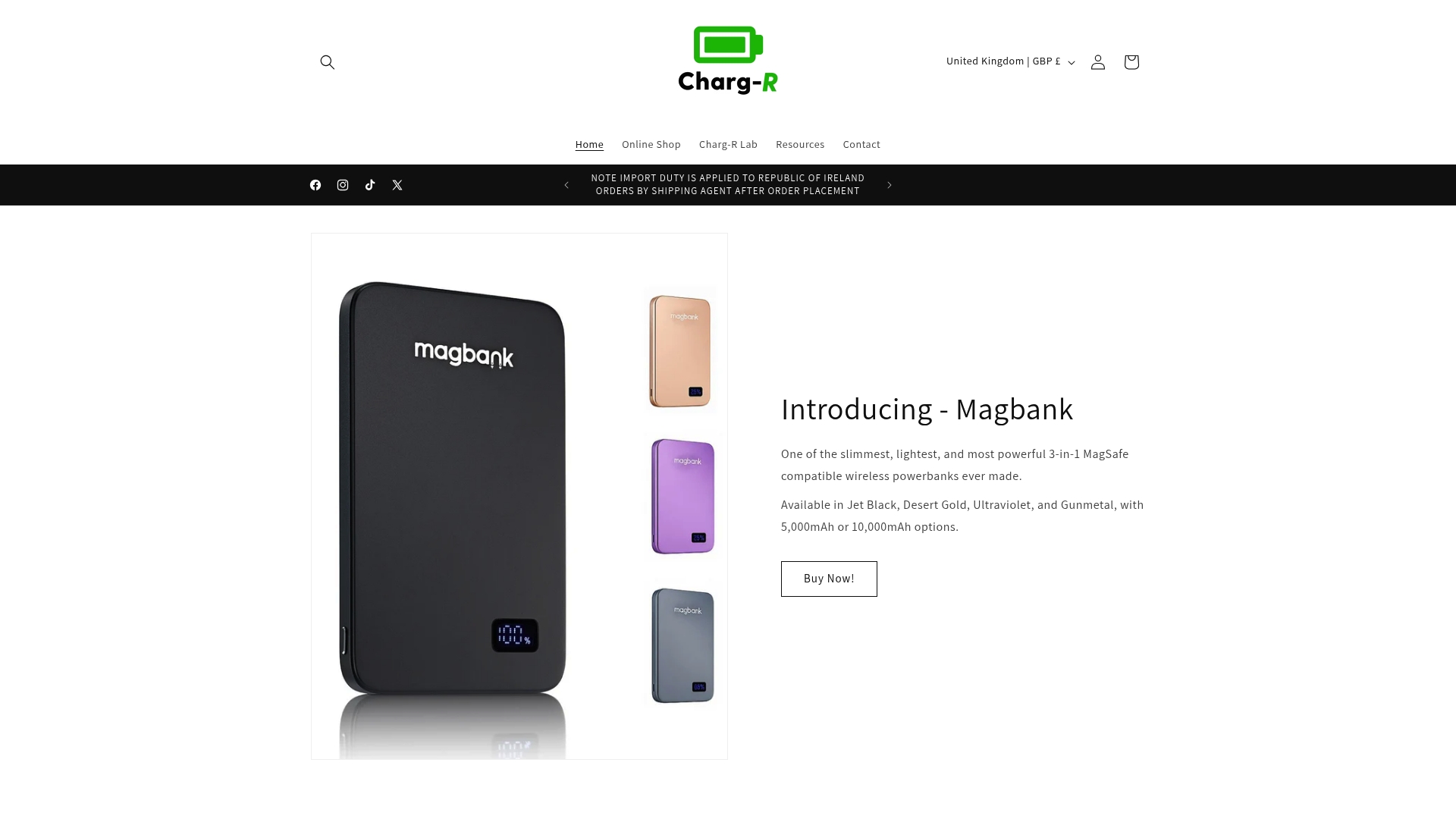
Complement your wireless charging pad with versatile power solutions. The Brickbank 100W PD powerbank provides substantial capacity for extended trips whilst maintaining compact dimensions. Pair it with the Travelbud 4-in-1 travel docking station to create a complete charging ecosystem that handles all your Apple devices from a single, organised hub. Transform your travel power setup with accessories designed specifically for the demands of modern mobility.
FAQ
Is wireless charging slower than using a cable?
Wireless charging typically delivers 7.5W to 15W compared to wired fast chargers reaching 27W or beyond. This makes wireless ideal for overnight hotel charging where convenience outweighs speed. Reserve wired charging for urgent situations when you need maximum power in minimum time.
Does wireless charging harm my Apple device battery?
Research demonstrates battery degradation rates differ by less than 2% annually between wireless and wired charging methods. Both approaches produce comparable battery longevity when using certified chargers and following proper charging practices. Device lifespan depends more on charge cycle management than charging method selection.
Can I charge multiple Apple devices wirelessly whilst travelling?
Multi-device wireless charging pads simultaneously power iPhone, AirPods, and Apple Watch from one compact accessory. These multi-device wireless chargers eliminate cable variety and reduce luggage bulk substantially. You create a tidy charging station in hotel rooms without managing multiple cables and adapters.
What safety features protect devices during wireless charging?
Modern wireless chargers incorporate foreign object detection that halts charging when metal objects appear on the pad. Temperature regulation prevents overheating by monitoring heat levels continuously and adjusting power delivery. Voltage control ensures consistent power regardless of input variations. These protections make wireless charging as safe as traditional wired methods.
How do I maximise wireless charging efficiency when travelling?
Position your device centrally on the charging pad to ensure optimal coil alignment and energy transfer. Remove cases thicker than 3mm that create distance between charging coils and impede power flow. Select chargers with 10W or higher output ratings to compensate for inherent efficiency losses. Use certified Qi or MagSafe accessories to guarantee proper safety features and reliable performance.